
Javier Milei: The Economics of the Reforms
- Tomás Bonito
- 4 de mai.
- 4 min de leitura
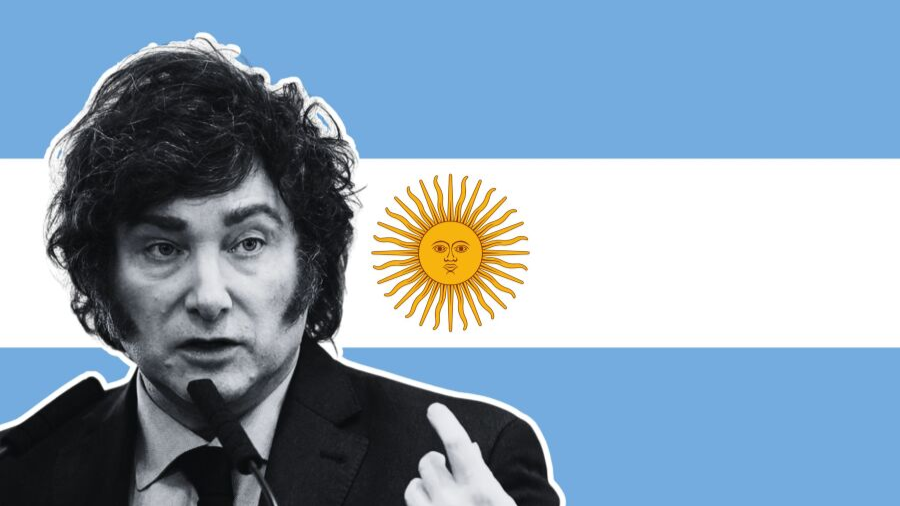
In the last 75 years, Argentina has suffered from chronic inflation. A temporary break occurred between 1991 and 2002 when the Argentine peso was pegged to the US dollar, but this led to massive public debt and the eventual abandonment of the Convertibility Plan. The period that followed was characterized by high unemployment and poverty, yet the peso was a cheap currency that made exports competitive, offering a glimmer of hope.
The strong exports filled government coffers, initiating a period of economic growth.
However, instead of laying the foundations for sustained growth, the government led by Néstor Kirchner (2003-2007) offered poor and populist management of public funds. Generous subsidies and spending on public sector expansion drained the treasury. While these measures reduced unemployment and poverty in the short term, they were impossible to maintain. To finance the increasing government spending, the State resorted to printing money, manipulating statistical data, and applying strict capital controls to prevent investors from leaving the country.
The inevitable outcomes were a sharp decrease in investment and the collapse of the peso, forcing Mauricio Macri to turn to the International Monetary Fund (IMF). A US$50 billion bailout was approved in 2018, contingent on strict spending cuts. Macri lost the 2019 elections, as the Argentine population held him responsible for the austerity and economic tragedy.
A new player then entered the game: Alberto Fernández, with Cristina Kirchner as his Vice President (Cristina had been First Lady between 2003 and 2007 and President from 2007 to 2015). They faced the COVID-19 pandemic and the subsequent economic disaster. By 2023, annual inflation had reached 160% due to the relentless printing of pesos, the poverty rate exceeded 40%, and the Central Bank's reserves were negative.
Argentina was once among the top ten countries in GDP per capita; today, it ranks around 70th. But is the nation sentenced to constant economic failure? According to Javier Milei, the answer is no. President Milei took office at the end of 2023 and immediately began implementing a system of libertarian economic measures: a drastic reduction of the state, cutting the number of government ministries (once 22 became only 9), reducing transfers to provincial governments, removing energy and transport subsidies, and devaluing the peso to align it more closely with the black-market rate. He also enacted the “Ley de Bases y Puntos de Partida para La Libertad de los Argentinos”, which initiated the privatization of state enterprises, deregulated the labour market to make hiring and firing easier for businesses, and created major incentives for large investments.
“Si te entran 100 no puedes gastar 300 (…) dejen de hacer caridad con el bolsillo ajeno.” This quote embodies Javier Milei’s libertarian viewpoint, serving as a direct attack on the historical fiscal deficits and what he sees as irresponsible government spending. For Milei, the state should not act as a philanthropist through social programs and subsidies that exceeds government revenue, as this directly to inflation and economic ruin. This mantra justifies his push for drastic austerity and a radical shrinkage of the state.
Furthermore, a key distinction from previous governments lies in his monetary policy. Instead of printing more money to finance public debt, Milei aims to eradicate the Central Bank’s ability to print money entirely and seeks to replace the fragile peso with the stable US dollar to import monetary discipline. The Argentine President argues that fiscal discipline is mandatory to guarantee monetary stability, which indicates his brutal "chainsaw" spending cuts. The goal is a zero fiscal deficit. They have also raised the LELIQ rate (Argentina's equivalent of the EURIBOR) to take money out of circulation. This makes credit more expensive and saving more attractive, reducing consumption and forcing prices down.
What have the results been? Inflation now stands at 31.8%, the lowest since August 2018, and the trend is downward. The percentage of people below the poverty line decreased to 38.1% in the second half of 2024, and this trend is also continuing downward, while GDP is growing at 6.3%. And even with tens of thousands of public-sector workers being fired, unemployment rate has not increase as much as it was expected by many critics, due to the deregulation of the labour market.
In October 2025, just days before the midterm elections, Donald Trump formalized a US$20 billion bailout in the form of a currency swap. This exchange is crucial for Milei to continue reducing inflation by stabilizing the peso's value.
Who wins in this geopolitical move? For Trump, it means supporting a South American ally, and the chance to be part of the "Miracle of Argentina" which would be a powerful global symbol of capitalist supremacy over the regimes of Venezuela, China and Russia. For Milei, besides facilitating a successful dollarization, it provides external validation and financial firepower independent of the IMF, strengthening his negotiating position.
Some critics argue that Milei's success is dependent on US assistance. However, it is impossible to overcome a crisis as profound as Argentina's pre-Milei situation without international cooperation. Moreover, the decreases in poverty and inflation are strong indicators that his economic decisions were successful even before the bailout.
Ultimately, the question is not whether reforms are harsh, but whether this medicine is necessary. After years of consistently failing with generous fiscal policies, Argentina was in need of a change. The October 2025 election results are a public mandate reflecting the belief that Milei’s promises will forge a successful Argentine economy in the long run. Having granted him the opportunity, the world must now observe and allow time to reveal the true cost and reward of this historic gamble. It is not yet a Miracle, but if it will be, let it be.


Comentários