
Arming the World Economy, Disarming Ourselves
- Matilde Alves
- 4 de mai.
- 3 min de leitura
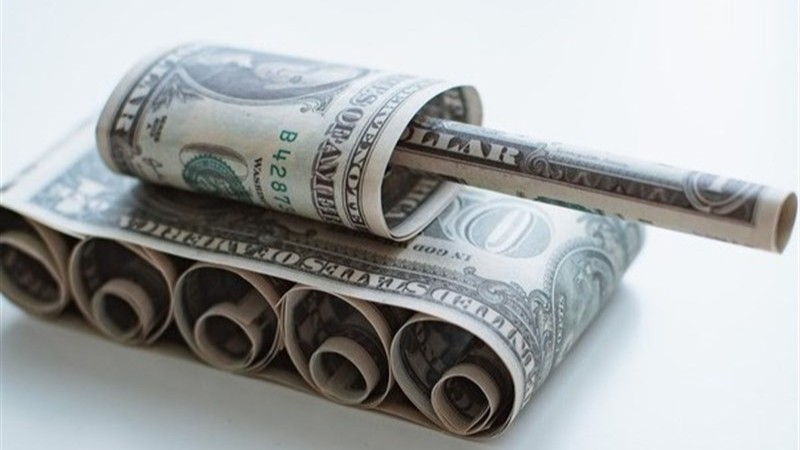
Until recently, globalization was promised as a simple tale of efficiency, and this tale of more trade, more complicated supply chains, and quick and cheaper finance was sufficient for quite a number of years. But today, this tale of efficiency comes across as quite naive because a significant part of international trade is still accounted for in dollars, many countries still hold most of their foreign exchange reserves in dollars, and many countries today are under sanctions, like Iran, Venezuela, Cuba, Afghanistan, and Syria.
In "The Weaponized World Economy" Henry Farrell and Abraham Newman describe how financial and technological infrastructure is no longer a shared space but an instrument of force:
“Globalisation built a world of dense networks as well as a small number of hub institutions, such as dollar-clearing banks, SWIFT, cloud giants, chip design software, advanced lithography, and ‘critical’ minerals. And these hub institutions enable one to monitor (observe flows), exclude (deny access), and condition (set terms of trade). There has been a transformation of efficient interdependence into potentially asymmetric power.”
The transformation was led by the US. Even prior to 9/11, it has already utilized dollar supremacy as a system stabilizer, but more importantly, as a tool of discipline, as exemplified in previous instances like Iran and Yugoslavia. However, after 9/11, it dawned on policymakers that dollar supremacy could and should be harnessed even more systematically, precisely because of the provisions of the Patriot Act of 2001, which enabled the US to actively isolate countries from the dollar system by merely freezing assets through blocking transactions.
Denying banks and companies access to the dollar system became, in this manner, a reflexive instrument of US power, from Iran to Russia, to the current sanctions game reset in Venezuela as of press time. However, as of lately, this game is no longer played in financial but in technological platforms. Policymakers first targeted banks, but then proceeded to target the entire microchip-based "ecosystem" in order to slow down AI development in computing that endanger supremancies in Washington.
China is not just waiting and seeing what happens. It is actually trying to build its own technology and material ecosystem, through more stringent export controls on essential inputs, vertical integration of mining and batteries, and large investments into non-Western substitutes for Western technology. It is settling for a loss of efficiency as a safe and sovereign alternative to dependence on the West and its technology. Every new round of US controls cements this view in Beijing that dependence on the West is a liability.
The European Union finds itself caught up in this middle scenario as they have this large market, powerful regulations, as well as trade ties with the US and China, but their system does not allow them easy, rapid economic coercion as used by China or the US. European businesses find themselves between a rock and a hard place due to measures from the US and Chinese backlash.
Economically, it is quite difficult to view this trend as anything other than concerning. On one hand, weaponizing the economy would appear, on paper, to have a number of clean choices running from diplomacy through war, via sanctions, tariffs, and export restrictions. And sometimes they actually work. But as a model going forward, it would seem that this balance sheet is more shadowy than bright. Network power is very much a force, but it is not omnipotent. Every time a point of leverage is applied, industries and countries adapt, finding new suppliers, rebuilding supply chains, and identifying alternative means of payment.
But we still repeatedly underestimate the systemic costs of all this. Copying supply chains, friend-shoring, and living in a world of continued mistrust is highly expensive on its own, contributing to increased fixed costs, reduced specialization, and low productivity growth, and a world economy that is slower, more inflationary, and more fragile than one that is open and integrated.
Weaponisation is also fueling political illusions. Sanctions are more easily implemented than the reforms required within the realms of education, infrastructure development, innovation, and societal cohesion. Sanctions are immediate actions, and reforms are slow and will take time to bear fruits. Farrell and Newman are correct that we are living in a world economy that is weaponized, and that there is a need for more rules, more institutions, and more cooperation between and among the democracies. But weaponization has become shorthand, and has become a proxy for serious economic policy and strategy. It provides the appearance of control but also undermines the very foundation that led to the success of these liberal democracies: trust, openness, and the capacity to operate at scale.


Comentários